Three Ecuadors, one tariff
The country is small on the map and complicated on the ground. Quito sits at 2,850 metres in the Andes; Guayaquil is humid coast at sea level; the Galápagos float about 1,000 km west into the Pacific; the Amazon basin spreads east of the cordillera. A traveler typically samples two or three of these in a single trip. Each has its own connectivity reality, and you don't want to be picking a SIM card for each one.
Roamzy charges $5.02 per gigabyte in Ecuador, billed in real time at $0.0049 per megabyte. No subscription, no expiry, no minimum bundle. One per-MB rate across 193 countries is the raw metered total, not a marketing line.
How much will Roamzy actually cost on this trip?
A typical visitor uses 0.5–1 GB per day: maps to the colonial centre of Quito, the bus and shared-taxi apps along the Pan-American, ride-hail in Guayaquil, video calls from a hostel in Baños, the camera-translator on a market sign in Otavalo. Call it 1 GB/day for the math:
| Trip length | Roamzy ($5.02/GB) | Tourist roaming pass | Local SIM at UIO/GYE |
|---|---|---|---|
| 3 days | $15.05 | $20–50 | $8–20 + ID and a 30-day cap |
| 1 week | $35.12 | $35–90 | $12–25 + paperwork |
| 2 weeks | $70.25 | $70–160 (often two passes) | $15–30 + cap |
Competitor prices in columns 3 and 4 are 2025 ranges based on typical offerings; exact figures depend on your home carrier and the airport store you visit. Roamzy's rate in column 2 is our actual published rate from the pricing page.
A local SIM at Mariscal Sucre or José Joaquín de Olmedo is cheap enough on paper but ties you to one country, a passport scan, and a window that resets the moment you spend a day in the Galápagos and forget about it. eSIM doesn't reset; the balance carries.
Where does Roamzy work in this country?
Ecuador's networks are uneven by geography, not by city size:
- Quito, Guayaquil, Cuenca — 4G/5G at 95%+, dense urban coverage, working signal on the TransMilenio-style trolley lines
- The Pan-American highway between Quito and Cuenca — LTE most of the way, dropouts in the high passes
- Baños, Otavalo, Mindo — fine in the towns, weakening as you climb into the cloud forest
- The Galápagos (San Cristóbal, Santa Cruz, Isabela) — 4G in the main settlements, near-zero on dive boats and uninhabited coast
- The Amazon (Tena, Coca, Cuyabeno) — patchy 3G/4G near the towns, nothing once the dirt road ends
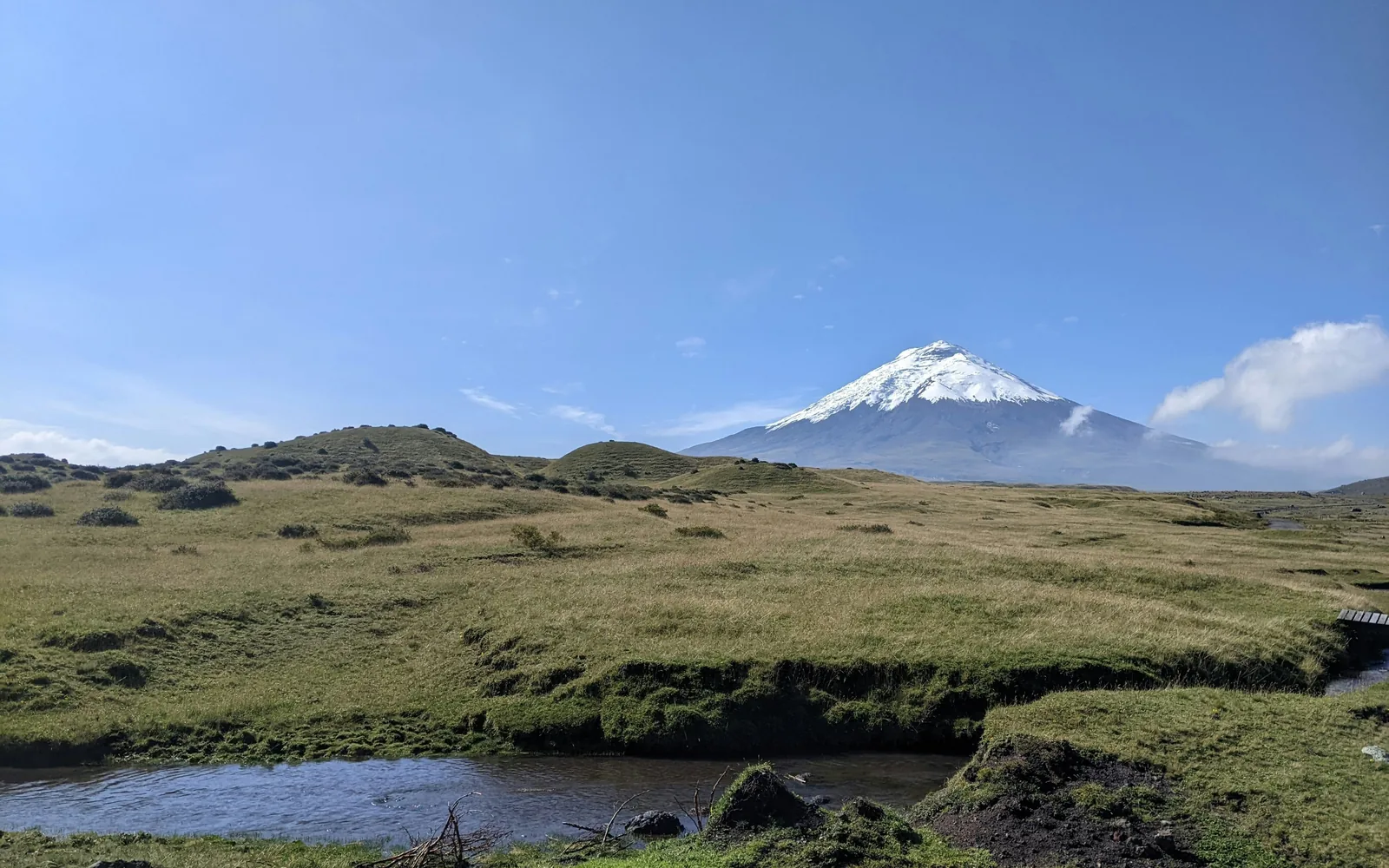
- Cotopaxi and Chimborazo — signal at the refugio, none above
For the volcano hikes and Amazon lodge stretches, offline maps and a downloaded language pack do the work the tower can't.
How do I install my Roamzy eSIM?
| Plug type | Voltage | Frequency | iOS | Android |
|---|---|---|---|---|
| Type A, B | 120 V | 60 Hz | iPhone XS+ | Pixel 3+, Galaxy S20+ |
- Sign in to Roamzy via Telegram or Google
- Your first eSIM is free and comes with real data on us. After that, top up from $20 in stablecoins (USDT or USDC): no cards, no banks, no FX surcharges
- The QR code appears in your dashboard as soon as the eSIM is issued
- On the iPhone itself (iOS 17.4 or newer), tap Tap to install in the QR card; otherwise Settings → Cellular → Add eSIM → scan QR (do this on home Wi-Fi before you fly)
- The counter starts the moment you land at UIO or GYE
Ecuador uses 120 V, 60 Hz — the same as North America. Supported stablecoins, networks, and common setup errors are in the FAQ.
What are Roamzy's honest limitations?
Ecuador's per-GB rate is higher than its neighbors because the underlying wholesale costs are higher; we don't disguise that. What we do is keep the rest of the product simple. No first-purchase promo to lure you, then jacked rates on the second top-up. No fine-print throttling. No auto-renewal you forgot to cancel six months after the trip.
The Ecuador rate wasn't focus-grouped. It is what falls out when you meter data honestly and refuse to add an expiry: a number with nothing else inside it, and therefore nothing to shave off.
What if my trip continues to other countries?
Ecuador is rarely a single-country trip. Backpackers cross south to Peru on the Tumbes route or north to Colombia at Rumichaca:
- Peru — Cuenca to Lima the hard way, the eSIM picks up the Peruvian network at the border
- Colombia — Quito to Pasto via Ipiales, same billing model, country-specific rate
- If you want the underlying mechanics — how roaming actually gets priced and why it hurts