The counterintuitive thing about connectivity in Venezuela
Venezuela has 31 million people and the urban density of a serious South American country, but the consumer telecom market is unusual: hyperinflation has shifted most everyday pricing into US dollars or stablecoins, the parallel economy runs on cash and Zelle, and a foreign traveler buying a local SIM is signing up for a registration process designed for residents, not for someone passing through. None of which has anything to do with how cellular data actually arrives at your phone — the networks themselves work, the signal exists, the question is who's paying for it and how. A travel eSIM sidesteps the whole bureaucracy and prices the bytes directly.
Roamzy charges $7.17 per gigabyte in Venezuela. That's $0.0070 per megabyte, billed in real time on Venezuelan networks. No subscription, no expiry on the unused balance, no minimum bundle. One per-MB rate across 193 countries — same model in Caracas as in Madrid.
How much will Roamzy actually cost on this trip?
A typical visitor uses 0.5–1 GB per day: maps in Caracas and Mérida, the camera-translator on a Spanish menu, ride-hail and taxi-WhatsApp coordination, voice notes home, contactless payment confirmations on a card that survived the landing. Call it 0.8 GB/day:
| Trip length | Roamzy ($7.17/GB) | Tourist roaming pass | Local SIM at Maiquetía |
|---|---|---|---|
| 3 days (~2.4 GB) | $17.20 | $30–80 | $10–25 + a long counter visit |
| 1 week (~5.6 GB) | $40.14 | $60–140 | $15–40 + 30-day cap |
| 2 weeks (~11 GB) | $78.85 | $140–300 (often two passes) | $25–60 + paperwork |
Competitor prices in columns 3 and 4 are 2025 ranges based on typical offerings; exact figures depend on your home carrier and the airport store you visit. Roamzy's rate in column 2 is our actual published rate from the pricing page.
A local SIM at Maiquetía (CCS) airport is technically possible for foreigners but the registration is bureaucratic, the counter time eats hours, and the resulting tariff is sold tourist-side. The eSIM is the lighter call.
Where does Roamzy work in this country?
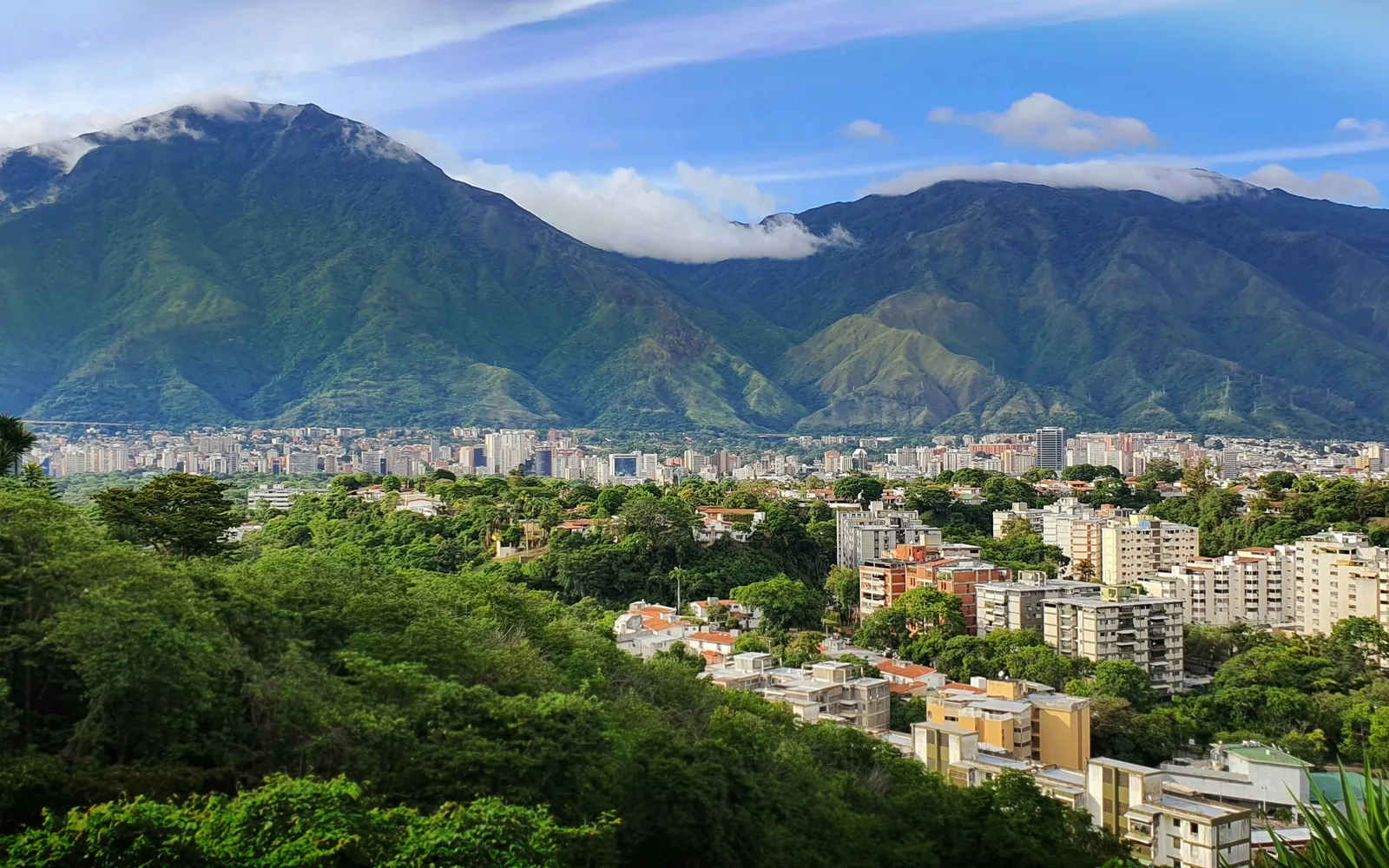
- Caracas (Chacao, Las Mercedes, Altamira, El Hatillo) — 4G across the metropolitan core; the long ridge of the Ávila has signal on the popular trails and at the cable-car stations
- Maracaibo, Valencia, Barquisimeto, Maracay — solid LTE in the urban centers
- Mérida and the Andean towns — 4G in the city; the cable car to Pico Espejo and the surrounding páramo are spotty
- Margarita Island — fine in Porlamar and the resort grid; weaker on the eastern beaches and El Yaque
- Los Roques — minimal cellular; this is dive-boat and Wi-Fi-at-the-posada country
- Gran Sabana / Canaima — patchy at the lodges, none in the wild; satellite communication territory
The autopistas around Caracas hold signal across most of their length; the long inter-city stretches in the llanos are quieter.
How do I install my Roamzy eSIM?
| Plug type | Voltage | Frequency | iOS | Android |
|---|---|---|---|---|
| Type A, B | 120 V | 60 Hz | iPhone XS+ | Pixel 3+, Galaxy S20+ |
- Sign in to Roamzy via Telegram or Google
- Top up with a minimum of 20 USDT — stablecoins, no cards, no banks, no FX surcharges
- The QR code appears in the dashboard once payment confirms
- Settings → Cellular → Add eSIM → scan QR (do this on home Wi-Fi before you fly)
- The counter starts the moment you land at Maiquetía (CCS)
Stablecoin payment is genuinely the better channel here — international cards charging from inside Venezuela have a high decline rate and the dashboard top-up runs on USDT regardless. Setup edge cases are in the FAQ.
What are Roamzy's honest limitations?
- No welcome promo that bait-and-switches the second top-up. The rate on top-up #1 is the rate on top-up #20.
- No fine-print throttling. One rate, full speed — first GB and the tenth both cost $0.0070/MB.
- No auto-renewal. Balance runs out, the eSIM stops.
In Venezuela the tariff is exactly as long as it needs to be: a per-MB rate that never expires. Short specifications leave no room for surprises.
What if my route continues to other countries?
- Colombia — common overland or short-flight pairing via the western border
- Brazil — south through the Roraima crossing, separate country rate
- If you want the underlying mechanics — how roaming actually gets priced and why it hurts