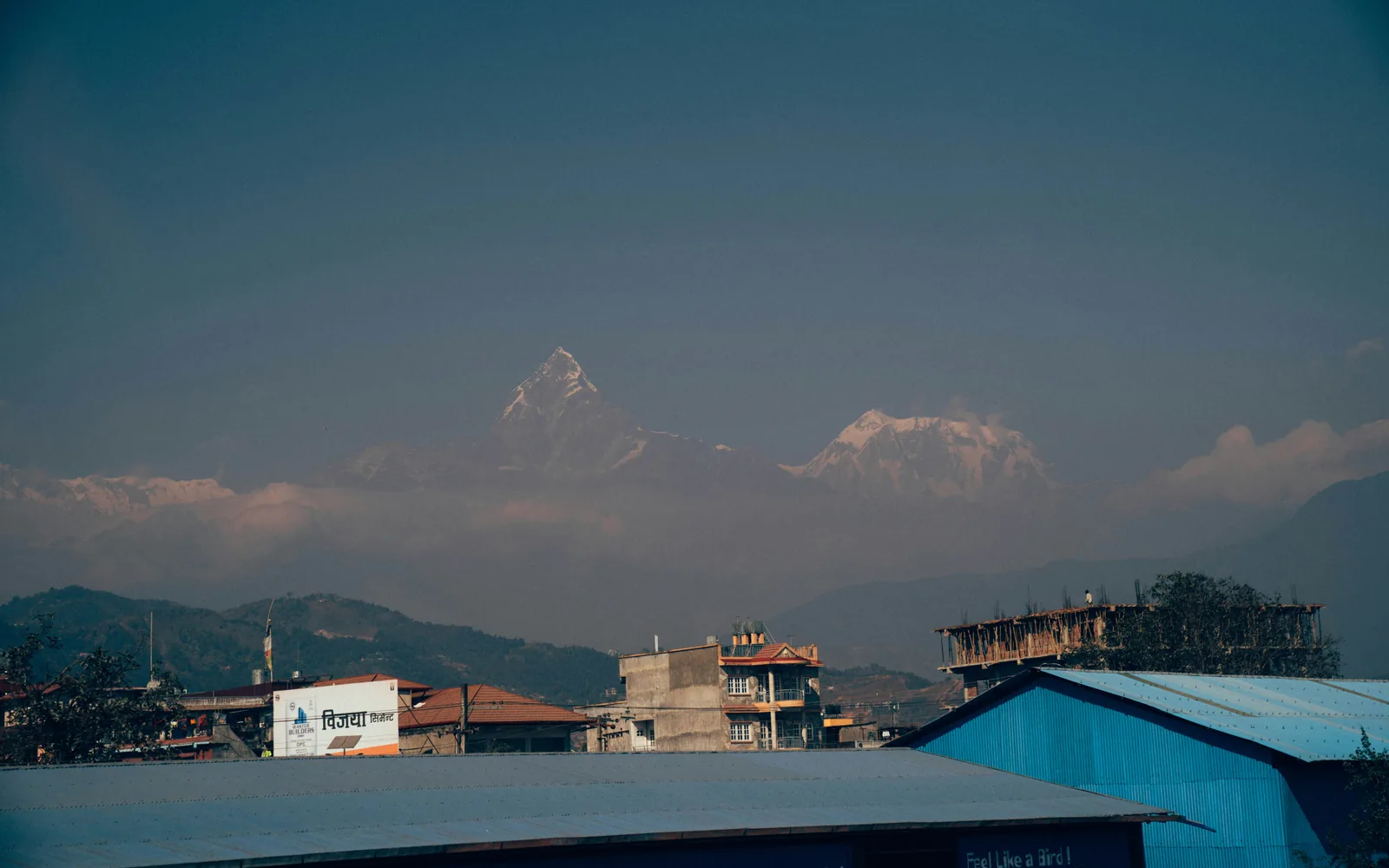
Nepal is the most expensive country in our pricing — here's why
We don't disguise it. Roamzy charges $18.43 per gigabyte in Nepal, which is roughly an order of magnitude higher than EU pricing. That's not a markup; it's the wholesale rate the global eSIM network charges roaming traffic on Nepali infrastructure. Mountain countries with limited fiber backhaul, heavy reliance on satellite for last-mile in remote zones, and small home-network bargaining power all push roaming wholesale up. We pass that through honestly rather than dress it up in a "premium adventure pack."
The good news for you as a traveler: most Nepal trips don't burn that much data. On the trail you're often out of signal entirely, and in Kathmandu and Pokhara guesthouse Wi-Fi covers the indoor hours.
How much will Roamzy actually cost on this trip?
Take 0.3 GB/day as the realistic average for a trekking-heavy trip. That's a low-data discipline: offline maps, photos uploaded only on hostel Wi-Fi, no streaming, messaging via Telegram (light) and WhatsApp. If you're a heavier user — daily video calls home, social uploads — adjust upward.
| Trip length | Roamzy ($18.43/GB) | Local tourist SIM (re-bought) | Roaming on home number |
|---|---|---|---|
| 1 week (2 GB at 0.3 GB/day) | ~$36.86 | $15–35 (7-day pack) | $60–150 ($8–20/day) |
| 2 weeks trekking (4 GB) | ~$73.73 | $25–55 (two packs) | $120–280 |
| 1 month (9 GB) | ~$165.89 | $45–90 (three to four packs) | $240–600 |
Competitor prices in columns 3 and 4 are 2025 ranges based on typical offerings; exact figures depend on your home carrier and the airport store you visit. Roamzy's rate in column 2 is our actual published rate from the pricing page.
Honestly: for trekking trips of more than two weeks, a local prepaid SIM is meaningfully cheaper than our rate. A 7-day or 30-day pack at the airport is a reasonable choice if you're committed to the country and don't mind the registration paperwork. The case for Roamzy in Nepal is short trips (a few days in Kathmandu before flying onward), or trips where you want one eSIM that also works in Thailand, Cambodia, and the rest of your route. Balance carries; what you load doesn't expire.
What matters on a Nepal trail
- Most of the EBC and Annapurna circuits have zero signal. That's geography. No tariff fixes it. Plan around offline maps (Maps.me, Organic Maps) and the inReach or Garmin if you need emergency comms.
- Tea-house Wi-Fi above 3,000 m is sometimes available, often $3–5/hour, slow. Don't rely on it.
- Kathmandu and Pokhara have working LTE. The eSIM is fast and stable in both cities; this is where data spend concentrates.
- Translator and Maps for the city days. Devanagari signage is normal; English is widespread but uneven outside Thamel and Lakeside.
- Card payments work in tourist restaurants and hotels; teahouses and trail villages are NPR cash only. Pull cash before you start the trek.
Trekking-data discipline
If you're using Roamzy on a multi-week trek, you can keep the bill manageable by treating data like fuel:
- Pre-download maps offline. Maps.me or Organic Maps work without signal once cached.
- Disable photo backup on cellular. Let iCloud or Google Photos sync only on Wi-Fi.
- Mute background app refresh for everything that isn't messages. A surprising amount of "10 MB used" on a quiet day is OS chatter.
- Send messages, not videos. Voice notes are an order of magnitude lighter than video.
- Pause streaming. A single Spotify session at 320 kbps eats more than a day of practical messaging.
Where does Roamzy work in this country?
- Kathmandu Valley (Kathmandu, Patan, Bhaktapur) — solid LTE, 5G rolling out
- Pokhara — strong LTE in town, weakening on the lake's far shore
- Chitwan, Lumbini — LTE in town and at the major sites
- The Kathmandu–Pokhara highway — LTE most of the route, drops in mountain passes
- EBC, Annapurna, Manaslu, Langtang routes — signal at the trailhead towns; mostly nothing in between
- Mustang, Dolpo, Manaslu high country — assume no signal
How do I install my Roamzy eSIM?
| Plug type | Voltage | Frequency | iOS | Android |
|---|---|---|---|---|
| Type C, D, M | 230 V | 50 Hz | iPhone XS+ | Pixel 3+, Galaxy S20+ |
- Sign in to Roamzy via Telegram or Google
- Top up with a minimum of 20 USDT — stablecoins, no cards, no banks, no FX surcharges
- The QR code appears in the dashboard once payment confirms
- Settings → Cellular → Add eSIM → scan QR (do this before you fly)
- The counter starts the moment you land at KTM
Supported stablecoins, networks, and common iPhone/Android setup errors are in the FAQ.
What are Roamzy's honest limitations?
Three traps Roamzy doesn't have, even at Nepal's higher rate.
- No expiry on the balance. Loaded $50, used $20 on the first trip — the rest waits.
- No auto-renewal. When the balance runs out, the eSIM stops. No background charge surfacing months later.
- No throttling. One rate. The first GB and the fifth cost the same $0.0180/MB. The premium is in the wholesale, not in the small print.
Nepal's rate is high because Nepal is expensive to reach, and we'd rather say so than wrap it in a bundle. A price with nothing underneath it can't be beaten by one with something underneath it.
What if the trail continues across borders?
Nepal often pairs with regional Asian travel. The eSIM hands over without you touching anything:
- Cambodia — common low-cost connection via Bangkok
- Sri Lanka — short flight from Kathmandu via Delhi or Doha
- If you want context on why home-number roaming hits so hard — how roaming pricing actually works