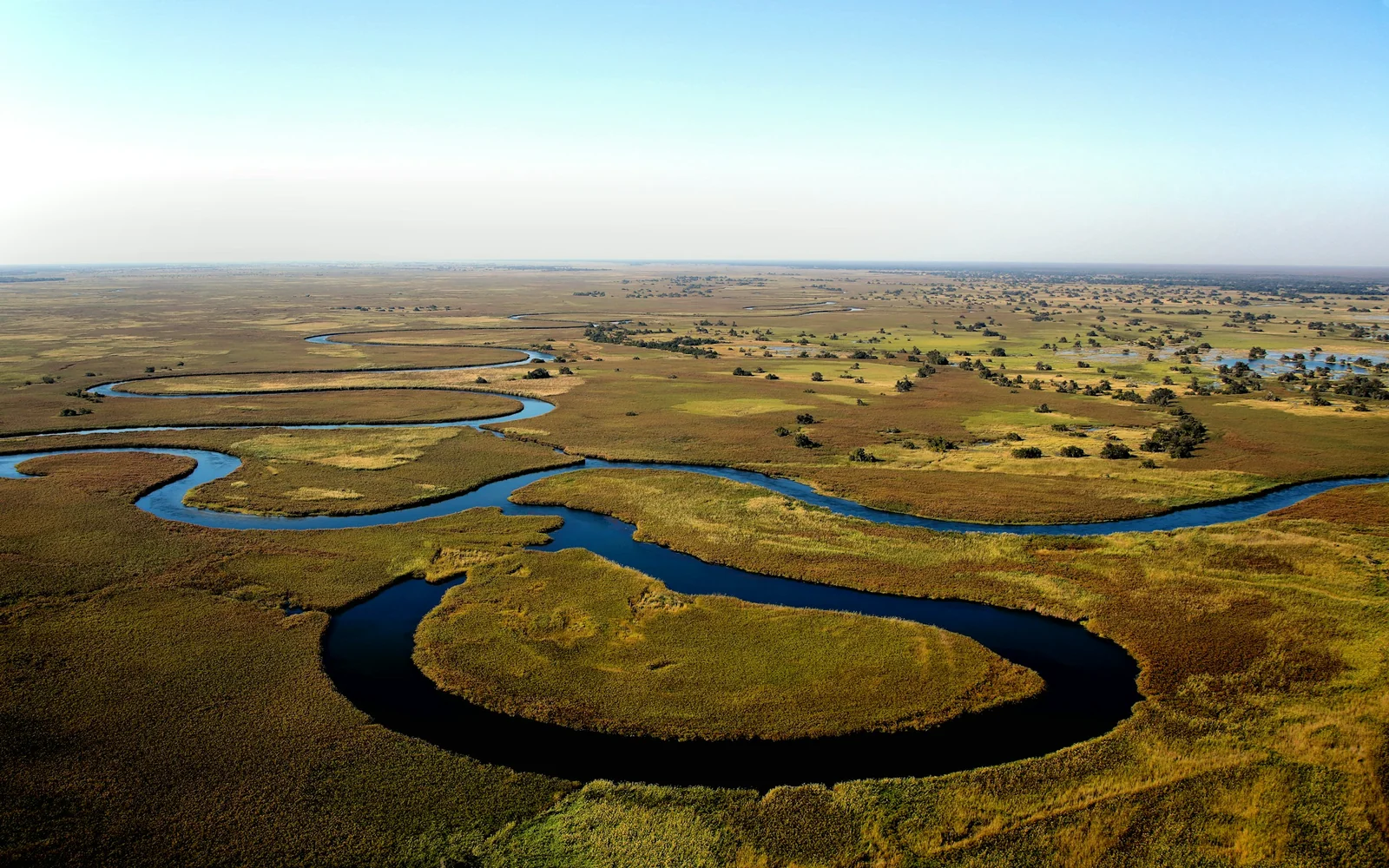
Botswana is sparsely populated and densely covered where people live
The country is roughly the size of France but home to under three million people, most of them clustered along the eastern corridor (Gaborone, Francistown) and around the safari hubs (Maun, Kasane). Cellular networks invest where the people are. The result, for a foreign visitor, is solid coverage in the cities and at safari camps — and very little between them across the Kalahari and on the long approach roads to the Okavango or Chobe.
Roamzy charges $4.10 per gigabyte in Botswana. That's $0.0040 per megabyte, billed in real time as your phone uses data on Botswanan networks. No subscription. No expiry on the unused balance. One per-MB rate across 193 countries is the raw output of the meter, not a marketing line.
How much will Roamzy actually cost on this trip?
Botswana visitors are mostly on safari itineraries — heavy lodge Wi-Fi reliance, cellular for navigation between camps and the occasional WhatsApp to a guide. Plan on 0.4–0.6 GB/day on cellular:
| Trip length | Roamzy ($4.10/GB) | Tourist roaming pass | Local SIM at Maun or SSK |
|---|---|---|---|
| 5 days (single safari) | $10.24 (2.5 GB) | $45–110 | $10–25 + paperwork |
| 10 days (Delta + Chobe) | $20.48 (5 GB) | $80–180 | $20–40 + 30-day cap |
| 2 weeks (multi-region) | $32.77 (8 GB) | $120–250 (often two passes) | $30–55 + 30-day cap |
Competitor prices in columns 3 and 4 are 2025 ranges based on typical offerings; exact figures depend on your home carrier and the local market reality. Roamzy's rate in column 2 is our actual published rate from the pricing page.
A local Botswana SIM at Sir Seretse Khama (SSK/Gaborone) or Maun is workable for a longer self-drive trip. For a typical fly-in safari week the queue and paperwork rarely save money against the eSIM.
Where is Roamzy reliable, and where isn't it?
- Gaborone, Francistown — solid 4G/LTE, 5G in central districts
- Maun (the Okavango Delta gateway) — 4G in town, weakening fast on the road north and west
- Kasane (the Chobe gateway) — 4G in town and along the Zambezi waterfront
- Okavango Delta camps — most fly-in lodges have satellite Wi-Fi; cellular is sparse to none
- Chobe National Park — 4G near Kasane and Sedudu, sparse deeper in
- Central Kalahari Game Reserve — minimal cellular; expect satellite or none
- Makgadikgadi pans (Kubu Island, Nxai) — patchy at best, often nothing
For self-drive trips through the Kalahari or self-organized Delta excursions, download offline maps and treat cellular as a bonus, not a guarantee.
How do I install my Roamzy eSIM?
| Plug type | Voltage | Frequency | iOS | Android |
|---|---|---|---|---|
| Type D, G, M | 230 V | 50 Hz | iPhone XS+ | Pixel 3+, Galaxy S20+ |
- Sign in to Roamzy via Telegram or Google
- Top up the eSIM with a minimum of 20 USDT — stablecoins, no cards, no banks, no FX surcharges
- The QR code appears in the dashboard once payment confirms
- Settings → Cellular → Add eSIM → scan QR
- The counter starts the moment you land at SSK, MUB (Maun), or BBK (Kasane)
Supported stablecoins, networks, and common iPhone/Android setup errors are in the FAQ.
What are Roamzy's honest limitations?
The most useful thing we can tell you about Botswana is where the network won't be: deep in the Delta, across the Kalahari, on the back tracks to the pans. That's geography, not a tariff problem.
- No welcome promo that flips on the second top-up. Top-up #1 and top-up #20 cost the same per megabyte.
- No fine-print throttling on the day you fly into the Delta.
- No auto-renewal you forgot to cancel after the safari. Balance runs out, the eSIM stops.
Botswana's pricing was engineered the way we'd want to buy it: metered, permanent, unannotated. A tariff built honest doesn't have to keep promising that it is.
If the safari extends across the region
- South Africa — common pairing on a return-leg through Johannesburg
- Zambia — north over the Kazungula bridge to Livingstone and Victoria Falls
- If you want the underlying mechanics — how roaming actually gets priced and why it hurts