Romania is a faster country than the brochure suggests
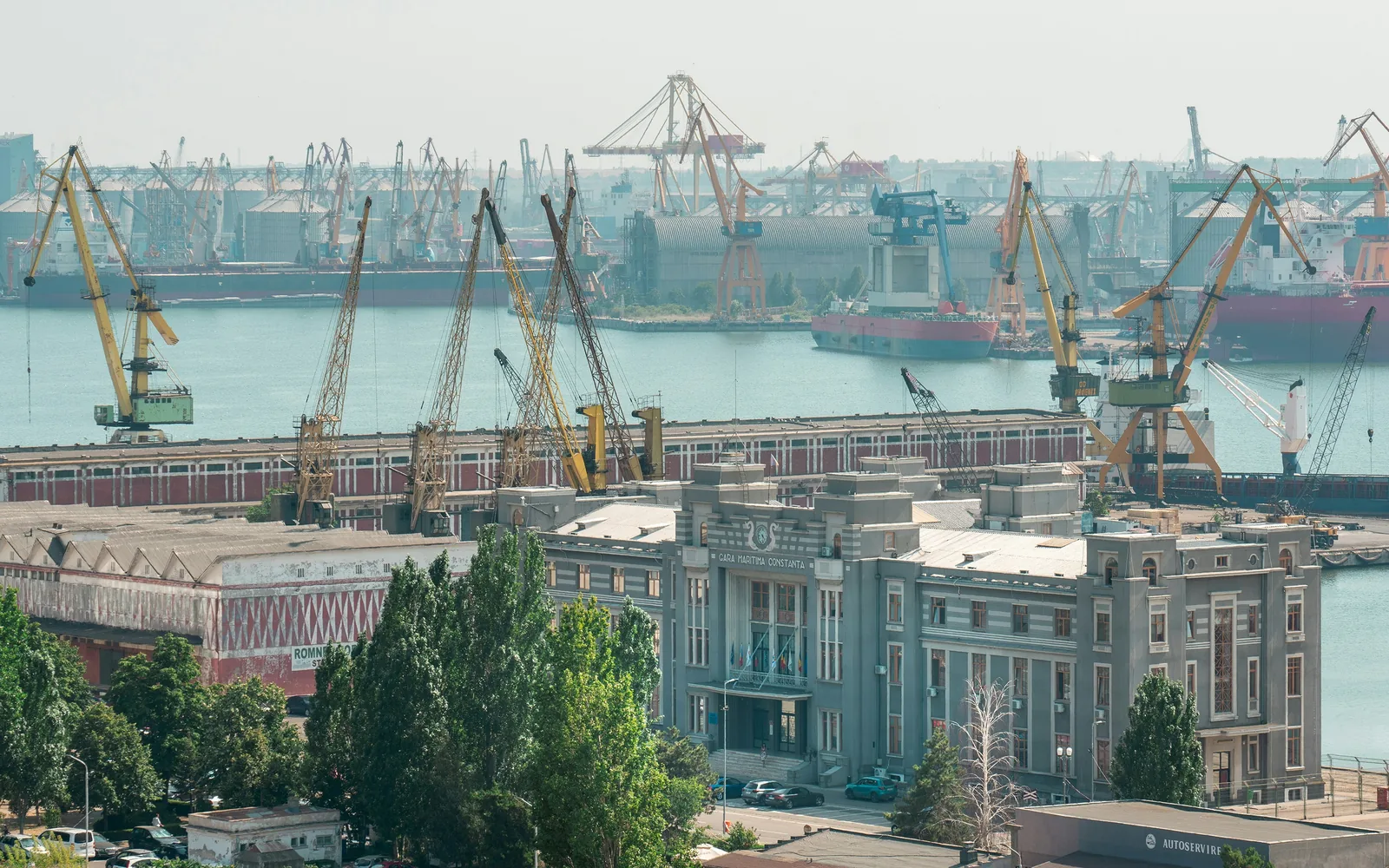
If you only know Romania through the cliché — Dracula's castle, communist apartment blocks, Transylvanian fog — you'll be surprised by Bucharest. The capital runs a working metro, dense LTE, and a startup scene that hangs out in coworking spaces in Pipera. The rest of the country is varied: Brașov and Sibiu are well-restored historic cores, the Carpathians hide working bear country, the Black Sea coast at Constanța is summer-resort territory. Across all of that, the network mostly holds.
Roamzy charges $0.61 per gigabyte in Romania. That's $0.0006 per megabyte, billed in real time on Romanian networks. No subscription, no expiry, no minimum bundle. One per-MB rate across 193 countries — same rate in central Bucharest as in a Carpathian village.
How much will Roamzy actually cost on this trip?
A Romanian travel day uses around 1 GB: Maps for Bucharest's tram-and-metro routes, the CFR rail app for the train to Brașov, your bank app for a card payment that's contactless almost everywhere in the cities, the camera-translator on a Romanian-only menu, video calls home. Call it 1 GB/day:
| Trip length | Roamzy ($0.61/GB) | Tourist roaming pass | Airport local SIM |
|---|---|---|---|
| 3 days | $1.84 | $15–35 | $8–20 + paperwork |
| 1 week | $4.30 | $25–55 | $12–25 + paperwork |
| 2 weeks | $8.60 | $35–90 (often two passes) | $18–35 + 30-day cap |
Competitor prices in columns 3 and 4 are 2025 ranges based on typical offerings; exact figures depend on your home carrier and the airport store you visit. Roamzy's rate in column 2 is our actual published rate from the pricing page.
A SIM at Otopeni runs the standard kiosk flow: passport, registration, tariff. The eSIM is attached on descent; the meter starts on a Romanian tower.
Where does Roamzy work in this country?
- Bucharest, Cluj-Napoca, Timișoara, Iași — 5G in the cores, dense LTE
- Bucharest Metro M1–M5 — signal on platforms and through most of the network
- The DN1 and motorway grid (A1, A2, A3) — continuous LTE
- The Transfăgărășan and Transalpina — strong LTE in the valleys, drops on the high passes (the road is closed in winter anyway)
- The Danube Delta — 4G in Tulcea and major launch points; out on the channels, signal thins
- Maramureș and rural Transylvania — solid LTE in towns, lighter on the long forest stretches
Romania is genuinely competitive on cost-per-MB infrastructure. The networks are fast where they reach, and the country covers most habitable terrain. The Carpathians and the deep Delta are the geography to plan around.
How do I install my Roamzy eSIM?
| Plug type | Voltage | Frequency | iOS | Android |
|---|---|---|---|---|
| Type C, F | 230 V | 50 Hz | iPhone XS+ | Pixel 3+, Galaxy S20+ |
- Sign in to Roamzy via Telegram or Google
- Top up with a minimum of 20 USDT — stablecoins, no cards, no banks, no FX surcharges
- The QR code appears in the dashboard once payment confirms
- Settings → Cellular → Add eSIM → scan QR
- The counter starts the moment you land at OTP, CLJ, or TSR
Romania uses RON. Most cards are accepted; rural cafés and markets often want cash. Decline DCC for a better rate. Supported stablecoins, networks, and common iPhone/Android setup errors are in the FAQ.
What are Roamzy's honest limitations?
Three traps Roamzy doesn't have, because they were never built in.
- No welcome promo that bait-and-switches the second top-up. The rate on top-up #1 is the rate on top-up #20.
- No fine-print throttling. One rate, full speed — first GB and the hundredth both cost $0.0006/MB.
- No auto-renewal. Balance runs out, the eSIM stops. No background charge surfacing months later.
The Romania rate is small and the fine print is smaller: there isn't any. You can't build a cheaper tariff than one with nothing extra in it, so we stopped there.
What if my trip continues to other countries?
Romania pairs naturally with the Balkans and Central Europe. The eSIM hands over the moment you cross:
- Hungary — common rail or drive via Oradea
- Bulgaria — Giurgiu–Ruse bridge or a short flight
- If you want the underlying mechanics — how roaming actually gets priced and why it hurts