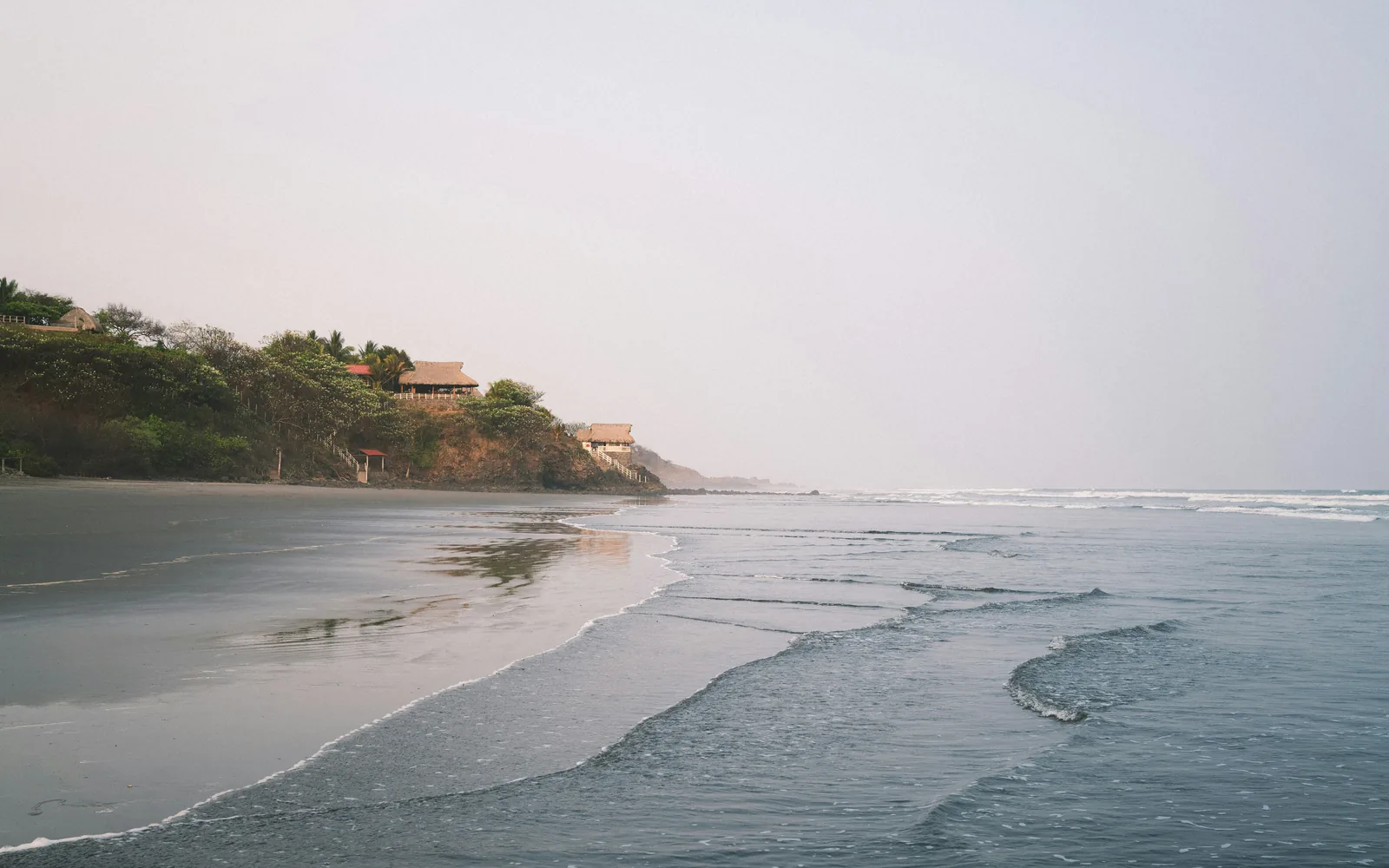
The smallest country in Central America does the trip in a week
El Salvador is barely 21,000 km², the size of a small Spanish region — and that's a feature for a traveler. You can be in San Salvador in the morning, surfing at El Tunco by lunch, watching the sunset from Suchitoto's lake the next day. The connectivity story matches the geography: dense in the corridor, thinner toward the eastern coast and the cordillera north of the lake.
Roamzy charges $1.43 per gigabyte in El Salvador. That's $0.0014 per megabyte, billed in real time on Salvadoran networks. No subscription, no expiry, no minimum bundle. One per-MB rate across 193 countries is the meter reading, not a marketing line.
How much will Roamzy actually cost on this trip?
A typical visitor uses 0.5–1 GB per day: ride-hail across San Salvador, maps to the surf at El Tunco or El Zonte, the camera-translator on a pupusa stand sign, video calls home from a beach bar. Call it 1 GB/day:
| Trip length | Roamzy ($1.43/GB) | Tourist roaming pass | Local SIM at SAL |
|---|---|---|---|
| 3 days | $4.30 | $15–40 | $5–15 + passport |
| 1 week | $10.04 | $30–80 | $8–20 + 30-day cap |
| 2 weeks | $20.07 | $70–140 (often two passes) | $12–25 + cap |
Competitor prices in columns 3 and 4 are 2025 ranges based on typical offerings; exact figures depend on your home carrier and the airport store you visit. Roamzy's rate in column 2 is our actual published rate from the pricing page.
El Salvador uses the US dollar as its official currency, so a local SIM purchase doesn't have FX confusion — but it still requires a counter visit and a passport, and the data window starts on purchase regardless of when you actually need bytes.
Where does Roamzy work in this country?
The Pacific corridor and the capital are well covered; the eastern departments are thinner:
- San Salvador, Santa Tecla, Santa Ana — 4G/LTE at 95%+, 5G in central districts
- El Tunco, El Zonte, Sunzal — solid LTE in the surf villages, weaker as you head east toward Punta Mango
- Suchitoto and Lake Suchitlán — fine in town, weakening on the lake and the back roads to La Palma
- The Pan-American highway between Guatemala and Honduras — continuous LTE on the asphalt
- The eastern coast (La Unión, Conchagua) — works in town, intermittent on the road to the gulf and on the Meanguera ferry
- El Imposible and the highland coffee zone — patchy 4G, offline maps for the hikes
How do I install my Roamzy eSIM?
| Plug type | Voltage | Frequency | iOS | Android |
|---|---|---|---|---|
| Type A, B | 115 V | 60 Hz | iPhone XS+ | Pixel 3+, Galaxy S20+ |
- Sign in to Roamzy via Telegram or Google
- Top up the eSIM with a minimum of 20 USDT — stablecoins, no cards, no banks, no FX surcharges
- The QR code appears in the dashboard once payment confirms
- Settings → Cellular → Add eSIM → scan QR
- The counter starts the moment you land at SAL
Supported stablecoins, networks, and common iPhone/Android setup errors are in the FAQ.
What are Roamzy's honest limitations?
Three traps Roamzy doesn't have because they were never built in. No welcome promo that flips on the second top-up. No fine-print throttling. No auto-renewal you forgot to cancel and discover six months after the trip on a card you don't watch.
El Salvador's pricing is an engineering artifact: a meter and a rate, nothing dated, nothing buried. That is hard to advertise and harder to undercut, which suits us fine.
What if my trip continues to other countries?
El Salvador travels well as part of a regional loop:
- Guatemala — Las Chinamas to Jutiapa in a shuttle, the eSIM hands over at the border
- Honduras — east through El Amatillo toward Tegucigalpa
- If you want the underlying mechanics — how roaming actually gets priced and why it hurts