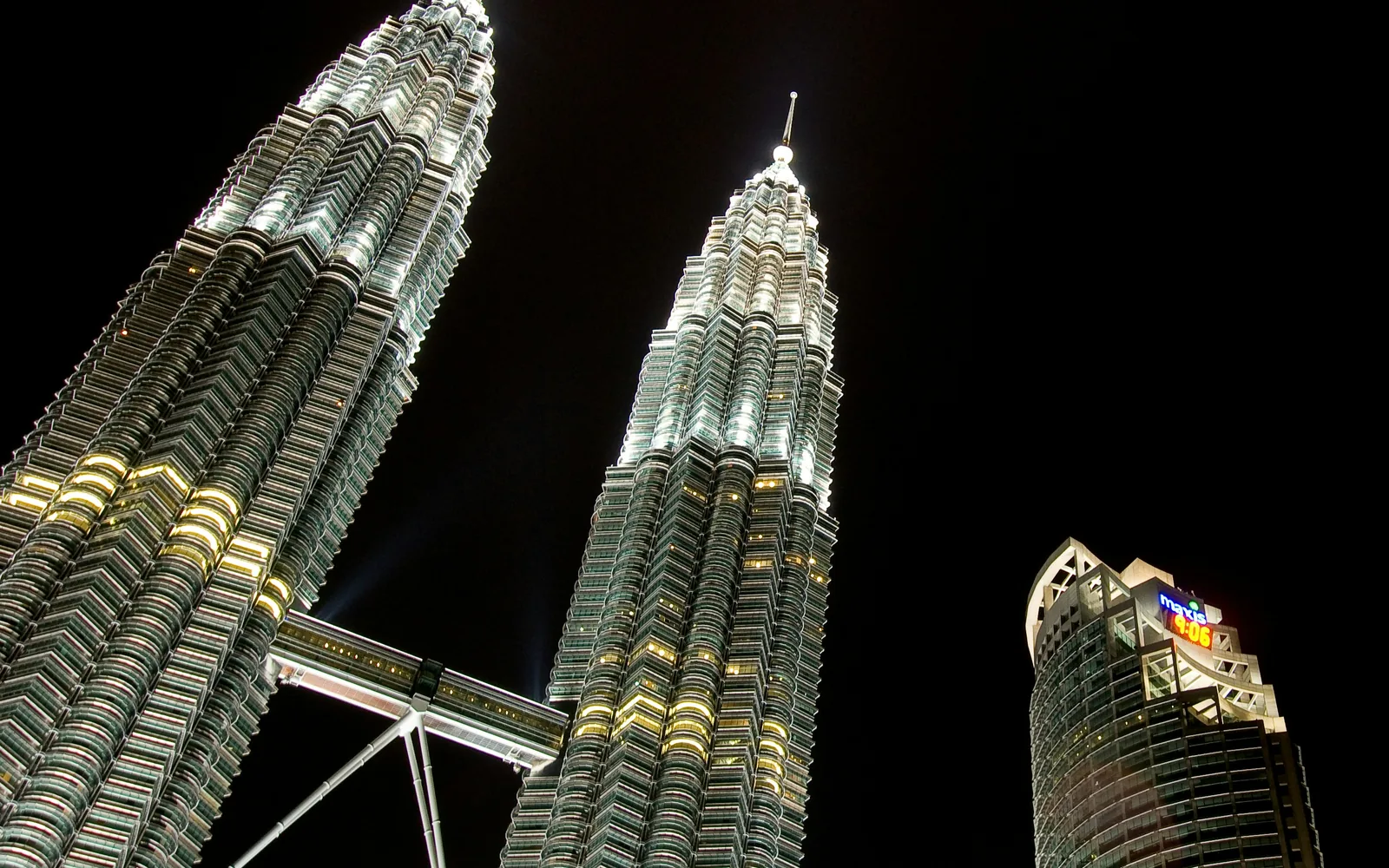
The trip that started on Penang and somehow lasted four months
Two weeks of street food in George Town. A flight to Kota Bharu, a long-tail boat to the Perhentians. Then the Cameron Highlands. Then KL because someone needed a visa. Then Borneo for the orangutans, and now you're in Kuching wondering whether to fly to Mulu. Malaysia stretches in both senses — geographically across two halves of the country and chronologically beyond what you booked.
Roamzy charges $1.43 per gigabyte in Malaysia, which is $0.0014 per megabyte. Real-time billing on actual usage. No expiry on the balance. No reset. No subscription you forgot to cancel. One per-MB rate across 193 countries — the same on day three as on day ninety.
How much does Roamzy cost over a long stay?
Take 1 GB/day as a realistic average. Hostels and cafés handle most of the indoor load on Wi-Fi; cellular kicks in for Grab, the street, and inter-city travel:
| Trip length | Roamzy ($1.43/GB) | Local tourist SIM (re-bought) | Roaming on home number |
|---|---|---|---|
| 2 weeks (14 GB) | $20.07 | $15–35 (7-day pack + top-up) | $70–160 ($5–11/day) |
| 1 month (30 GB) | $43.01 | $30–65 (two packs, mismatched windows) | $180–350 |
| 2 months (60 GB) | $86.02 | $60–130 (three to four packs back-to-back) | not realistic |
Competitor prices in columns 3 and 4 are 2025 ranges based on typical offerings; exact figures depend on your home carrier and the airport store you visit. Roamzy's rate in column 2 is our actual published rate from the pricing page.
A local Malaysian SIM in KL is genuinely cheap up front. The catch is what happens after: 7- and 14-day "tourist packs" reset the balance, force re-registration when you renew, and don't carry over to East Malaysia in the same way they handle the peninsula. For a six-week trip, that's three or four SIM swaps, three or four 7-Eleven queues, three or four passport scans. Roamzy has one rate — same for three days, same for three months.
What matters on a long trail?
- Hostel Wi-Fi is a lottery. Bachok, Kapas, the Perhentians — networks get slammed at sunset. KL, Penang, JB hold up.
- Grab is the universal interface. Cabs without meters are an unsolved problem; Grab solves it. Also food, also small parcels.
- The Borneo flights. KL–Kuching, KL–Kota Kinabalu — a separate connectivity story across the South China Sea. The eSIM keeps the same rate.
- Foodpanda for delivery. Late-night roti from a hostel bunk runs through the app.
- TouchNGo eWallet is the local payments app — most foreign cards work as backup, but local QR-pay matters in smaller towns.
A monthly data budget shapes up: maps ~5 GB, translator ~1 GB, messaging and home calls ~7 GB, Grab ~1 GB, bookings and photo upload ~10 GB, OS background ~6 GB. That's the 30 GB month.
Where does Roamzy work in this country?
- Kuala Lumpur, Penang, Johor Bahru, Kuching, Kota Kinabalu — 5G in the centers, solid LTE around them. KL Monorail and MRT hold signal underground
- Langkawi, Tioman, Pangkor — workable LTE in resort zones; remote beaches drop
- Cameron Highlands and Genting — solid LTE, occasional drops on switchbacks
- The Perhentians, Redang, Kapas — 4G near the village, gone on the far beaches and dive sites
- Borneo interior (Mulu, Niah, Maliau) — patchy or none in the deep jungle; offline maps mandatory
- Malacca, Ipoh, Taiping — strong LTE through the heritage cores
How do I install my Roamzy eSIM?
| Plug type | Voltage | Frequency | iOS | Android |
|---|---|---|---|---|
| Type G | 240 V | 50 Hz | iPhone XS+ | Pixel 3+, Galaxy S20+ |
- Sign in to Roamzy via Telegram or Google
- Top up the eSIM with a minimum of 20 USDT — stablecoins, no cards, no banks, no FX surcharges
- The QR code appears in the dashboard once payment confirms
- Settings → Cellular → Add eSIM → scan QR (do this before you fly)
- The counter starts the moment you land at KUL, PEN, BKI, or KCH
Plugs are Type G — same as the UK, bring a chunky three-pin adapter if you're coming from anywhere else. Supported stablecoins, networks, and common iPhone/Android setup errors are in the FAQ.
What are Roamzy's honest limitations?
Long-trip travelers historically lose money to three things. Roamzy doesn't close those traps — they don't exist in the product.
- No expiry on the balance. Loaded $40, used $11 on the first trip — the rest waits for the next one.
- No auto-renewal. When the balance runs out, the eSIM stops. No background charge to a card you forgot about.
- No throttling. One rate. The first GB and the hundredth cost the same $0.0014/MB.
That's the engineering consequence of selling bytes instead of packages. You can't price below this without re-introducing the small print, so we don't.
What if the trail continues across borders?
A long Southeast Asia route is the norm. Roamzy uses one rate per country, no manual switching at borders:
- Thailand — overland from Penang to Hat Yai, separate country rate
- Singapore — over the causeway from Johor Bahru, separate country rate
- Indonesia — short ferry to Sumatra or flight to Bali
- Vietnam — common continuation by air from KL
- If you want context — how roaming pricing actually works