Nigeria has the largest mobile market in Africa
The country runs four major operators competing across more than 200 million people, and that competition shows up where it matters: dense LTE across Lagos, Abuja, Port Harcourt, Kano, and the major corridors between them. The network isn't the question. The question is what sits between you and the network — a roaming pass priced for fear of West Africa, a SIM-registration process that wants your passport and a local guarantor, or a plan that throttles after 5 GB.
Roamzy charges $3.69 per gigabyte in Nigeria. That's $0.0036 per megabyte, billed in real time as your phone uses data on Nigerian networks. No subscription. No expiry on the unused balance. One per-MB rate across 193 countries is the bill in full, not a marketing line.
How much will Roamzy actually cost on this trip?
Most foreign travelers to Nigeria are on business — Lagos for finance and tech, Abuja for government, Port Harcourt for oil. Cellular usage is heavy: Slack, Teams, video calls, ride-hail, daily logistics. Plan on 1–1.5 GB/day:
| Trip length | Roamzy ($3.69/GB) | Tourist roaming pass | Local SIM at LOS |
|---|---|---|---|
| 3 days (single meeting) | $8.48 (2.3 GB) | $25–60 | $5–15 + KYC and SIM-registration |
| 1 week | $23.22 (6.3 GB) | $50–120 | $15–30 + 30-day cap |
| 2 weeks | $46.08 (12.5 GB) | $100–220 (often two passes) | $25–50 + 30-day cap |
Competitor prices in columns 3 and 4 are 2025 ranges based on typical offerings; exact figures depend on your home carrier and the local market reality. Roamzy's rate in column 2 is our actual published rate from the pricing page.
A local SIM in Nigeria is genuinely cheap, but the registration process for a foreign visitor — passport, sometimes a National Identification Number proxy through a local sponsor — adds a step most short-trip travelers skip. The eSIM avoids it entirely.
Where is Roamzy reliable, and where isn't it?
- Lagos (Lekki, Victoria Island, Ikoyi, Ikeja) — solid 4G/LTE, 5G in central business districts
- Abuja — 4G across central zones, 5G in select areas
- Port Harcourt, Kano, Ibadan — solid LTE in the urban cores
- The Lagos–Ibadan expressway — workable LTE in populated stretches
- The Niger Delta — uneven; cities yes, creek areas no
- Northern rural corridors (Sokoto, Kebbi) — patchier; check current state for travel
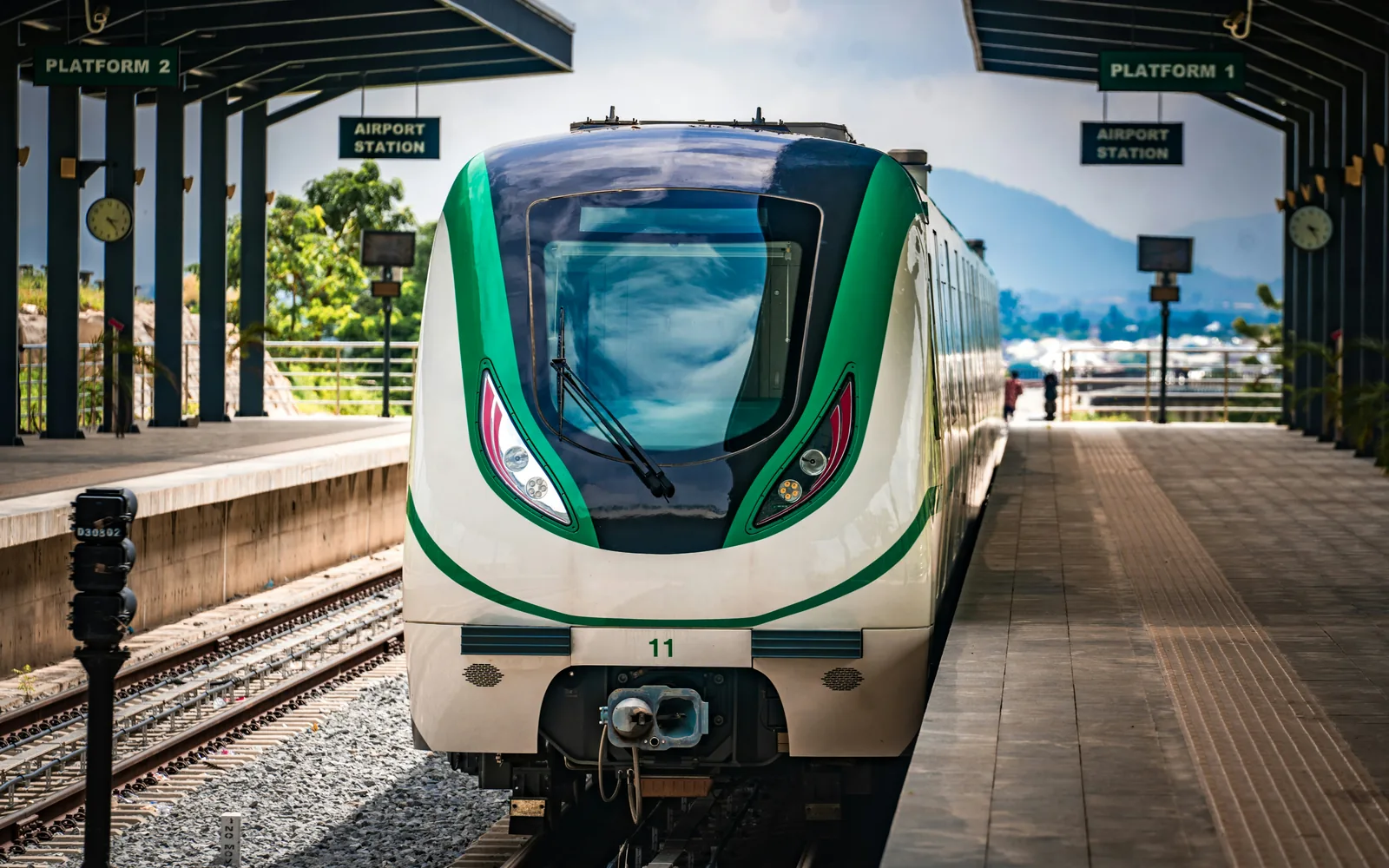
- Lagos third-mainland bridge and the rail corridor — continuous signal
Lagos traffic is its own genre — expect to spend a lot of time in transit. The eSIM keeps you connected for ride-hail, calls, and Slack while you're stuck on the Lekki–Epe expressway.
How do I install my Roamzy eSIM?
| Plug type | Voltage | Frequency | iOS | Android |
|---|---|---|---|---|
| Type D, G | 240 V | 50 Hz | iPhone XS+ | Pixel 3+, Galaxy S20+ |
- Sign in to Roamzy via Telegram or Google
- Top up the eSIM with a minimum of 20 USDT — stablecoins, no cards, no banks, no FX surcharges
- The QR code appears in the dashboard once payment confirms
- Settings → Cellular → Add eSIM → scan QR (do this on home Wi-Fi before flying)
- The counter starts the moment you land at LOS (Lagos) or ABV (Abuja)
Supported stablecoins, networks, and common iPhone/Android setup errors are in the FAQ.
What are Roamzy's honest limitations?
Three traps Roamzy doesn't have, because they were never built in.
- No welcome promo that flips on the second top-up. First top-up and twentieth bill the same per megabyte.
- No fine-print throttling on the day of a deal close. One rate, full speed.
- No auto-renewal that hits the next quarter's expense report. Balance runs out, the eSIM stops.
We could dress the Nigeria rate up as a bundle and it would only get worse. Per-megabyte with no expiry is the floor of honest pricing, and floors don't undercut.
What if my trip extends across West Africa?
- Benin — common short hop west via Cotonou
- Côte d'Ivoire — west on the regional flight network
- Cameroon — east, frequent regional connection
- If you want the underlying mechanics — how roaming actually gets priced and why it hurts