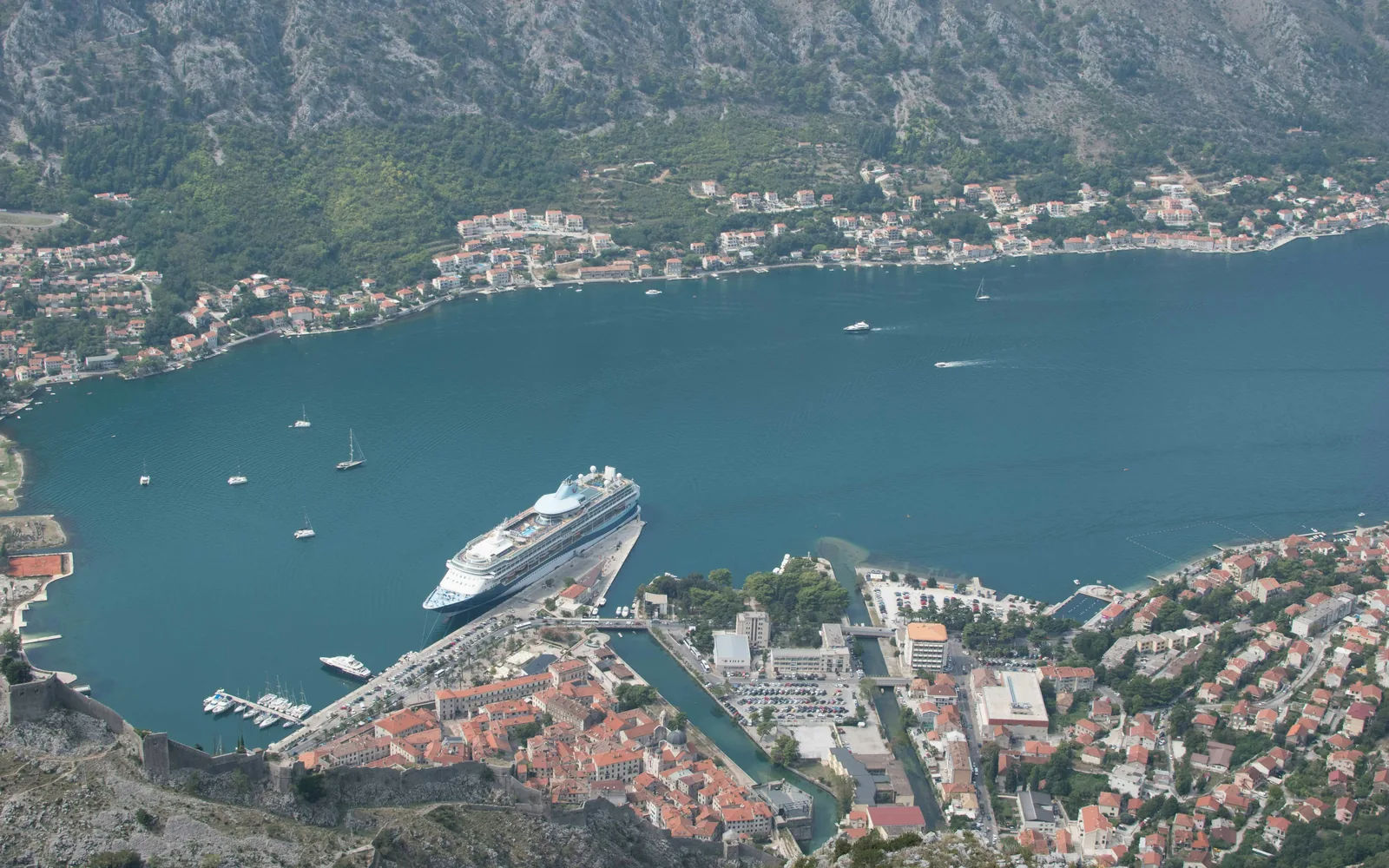
One small country, three different terrains
You drive an hour from Tivat airport and you're in three Montenegros at once: the Adriatic coast around Kotor and Budva, the limestone mountains behind it, and the high plateau of Durmitor a few hours further north. Telecom coverage tracks that geography unevenly. The coast and the capital are densely covered. The Bay of Kotor's vertical roads do strange things to signal. The mountain interior thins out fast.
Roamzy charges $2.46 per gigabyte in Montenegro, or $0.0024 per megabyte, billed in real time. Montenegro isn't in the EU and sits outside the bloc's regulated roaming caps, so the rate sits a notch above neighbors like Croatia or Slovenia — that's the honest price for the "EU no Reg" zone. One per-MB rate across 193 countries is the blueprint of the charge, not a marketing line.
How much will Roamzy actually cost on this trip?
Visitor patterns in Montenegro are predictable: Google Maps along the coastal road, ride-hail and the occasional taxi negotiation in Kotor, restaurant translators, ferry timetables for the Bay, the rare video call. Plan on 0.7–1 GB/day:
| Trip length | Roamzy ($2.46/GB) | Tourist roaming pass | Local SIM |
|---|---|---|---|
| 3 days (weekend) | $7.37 | $20–45 | $10–20 + paperwork |
| 1 week | $17.20 | $35–80 | $15–30 + 30-day cap |
| 2 weeks | $34.41 | $70–140 (often two passes) | $20–35 + 30-day cap |
Competitor prices in columns 3 and 4 are 2025 ranges based on typical offerings; exact figures depend on your home carrier and the airport store you visit. Roamzy's rate in column 2 is our actual published rate from the pricing page.
A Montenegrin SIM at Tivat or Podgorica runs about €10–20 plus passport and a queue. For a long-weekend trip, the math doesn't favor it.
Where does Roamzy actually work on the ground?
- Podgorica, Budva, Kotor, Tivat — solid LTE, 5G in central districts
- The coastal road from Herceg Novi to Bar — continuous LTE; the Bay's vertical climbs cause brief drops
- Cetinje and the Lovćen serpentines — workable 4G in patches
- Durmitor National Park — patchy 4G in towns, weakening on the high plateau
- The Tara canyon and rafting routes — expect long stretches without signal
The Bay of Kotor's geography (steep walls, narrow water) means the eSIM occasionally hands between cells more than you'd expect. That's physics, not a tariff problem.
How do I install my Roamzy eSIM?
| Plug type | Voltage | Frequency | iOS | Android |
|---|---|---|---|---|
| Type C, F | 230 V | 50 Hz | iPhone XS+ | Pixel 3+, Galaxy S20+ |
- Sign in to Roamzy via Telegram or Google
- Top up the eSIM with a minimum of 20 USDT — stablecoins, no cards, no banks, no FX surcharges
- The QR code appears in the dashboard once payment confirms
- Settings → Cellular → Add eSIM → scan QR
- The counter starts the moment you land at Tivat or Podgorica
Supported stablecoins, networks, and common iPhone/Android setup errors are in the FAQ.
What are Roamzy's honest limitations?
Three traps Roamzy doesn't have, because they were never built in.
- No welcome promo on the first top-up that flips the second. Top-up #1 and top-up #20 cost the same per megabyte.
- No fine-print throttling halfway through the trip. One rate, full speed.
- No auto-renewal that surfaces a month after you flew home. Balance runs out, the eSIM stops.
You won't set a reminder for this eSIM, because nothing in it runs out or rolls over. That's the Montenegro tariff working as designed, not as advertised.
If you cross the Adriatic or the border
Montenegro is rarely the only stop on a Balkan trip. The eSIM hands over without you touching a setting:
- Croatia — common via the Dubrovnik corridor
- Albania — south through Ulcinj into Shkodër
- Serbia — north on the Belgrade road
- If you want the underlying mechanics — how roaming actually gets priced and why it hurts