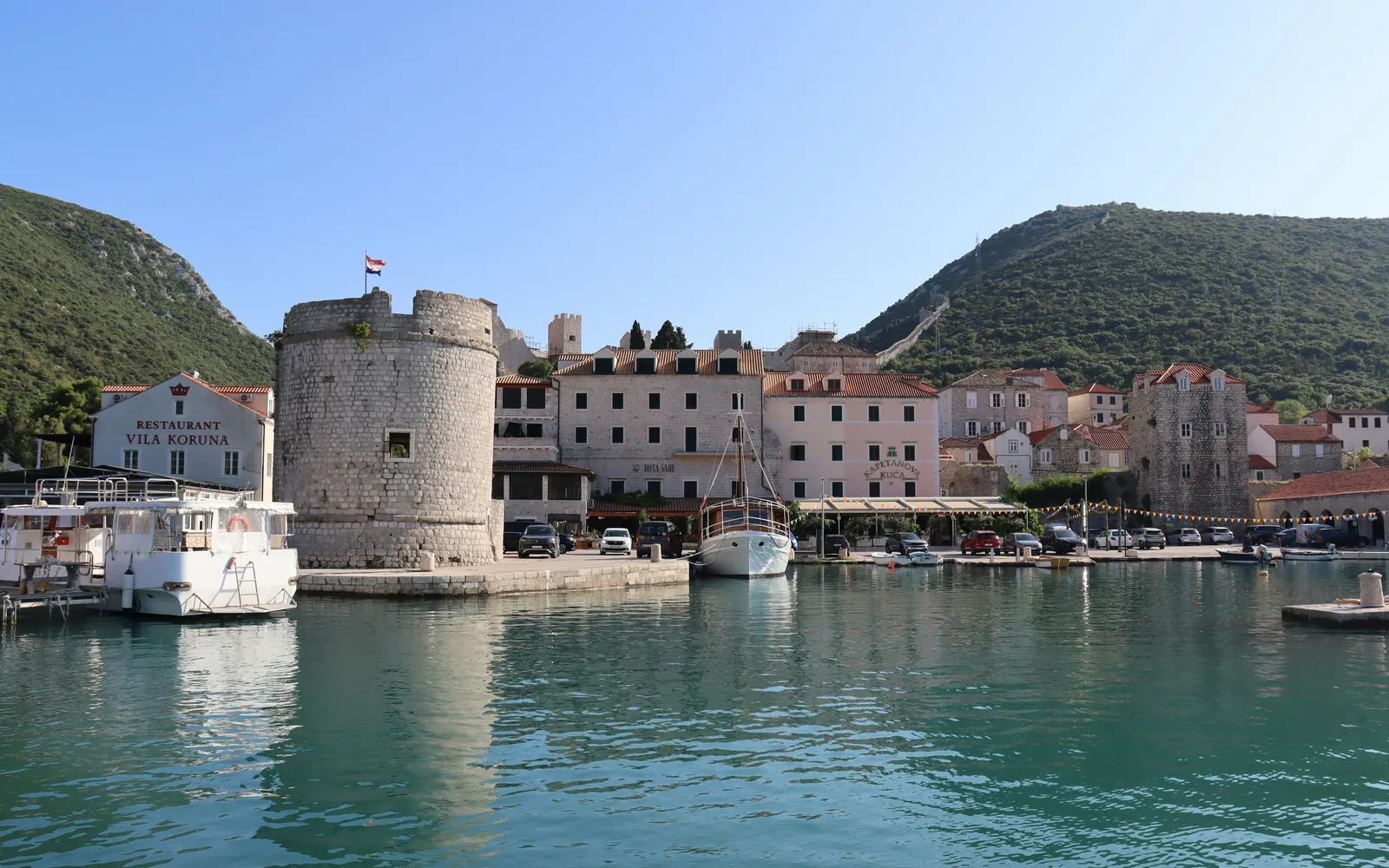
One major city, a long river, and a lot of empty country
Mali covers about 1.24 million km² and holds around 20 million people, the overwhelming majority of them concentrated in Bamako and along the Niger River as it sweeps north past Ségou, Mopti, and Timbuktu before bending southeast through Gao. The country's south is fertile and densely populated; the north is Saharan and very thinly settled. From a connectivity standpoint, that means good cellular in Bamako, workable in the regional centres along the river, and sparse-to-absent in the desert. A travel eSIM doesn't change that geography — it just makes the metering honest about which parts of the country you're paying for cellular in.
Roamzy charges $3.69 per gigabyte in Mali. That's $0.0036 per megabyte, billed in real time on Malian networks. No subscription, no expiry on the unused balance, no minimum bundle. One per-MB rate across 193 countries — the figure on the invoice, not a marketing line.
How much will Roamzy actually cost on this trip?
A typical visitor uses 0.4–0.7 GB per day on cellular: maps in Bamako, the WhatsApp to a fixer or driver, the camera-translator on French and Bambara signs, voice notes home, the rare bank-app push for the contactless payment that occasionally works. Call it 0.6 GB/day:
| Trip length | Roamzy ($3.69/GB) | Tourist roaming pass | Local SIM at Bamako |
|---|---|---|---|
| 3 days (~2 GB) | $7.37 | $25–55 | $5–15 + KYC and a passport scan |
| 1 week (~4 GB) | $14.75 | $45–90 | $8–20 + paperwork |
| 2 weeks (~8 GB) | $29.49 | $80–180 (often two passes) | $15–35 + 30-day cap |
Competitor prices in columns 3 and 4 are 2025 ranges based on typical offerings; exact figures depend on your home carrier and the airport store you visit. Roamzy's rate in column 2 is our actual published rate from the pricing page.
A local Malian SIM at Bamako-Sénou is workable for a multi-month posting. For a one- to two-week visit the eSIM is the simpler answer.
Where is Roamzy reliable, and where isn't it?
- Bamako (ACI 2000, Hippodrome, Hamdallaye) — 4G across the working city; signal on the road in from Sénou and along the Niger waterfront
- Ségou, Sikasso, Kayes, Koutiala — workable LTE in the regional centres
- Mopti, Djenné — 4G in the towns; the Niger River corridor between has signal at the populated villages, sparse on the open river
- Dogon country (Bandiagara escarpment) — 4G at the access towns; sparse on the cliff trails
- Timbuktu and Gao — historically intermittent cellular; current service can vary by week and security situation
- Saharan north (Kidal, the Adrar des Ifoghas) — assume nothing; satellite communication country
Security advisories shape the routes most travelers actually drive — the cellular map roughly tracks the safer corridors. Any northern run needs offline maps and a satellite messenger as baseline kit.
How do I install my Roamzy eSIM?
| Plug type | Voltage | Frequency | iOS | Android |
|---|---|---|---|---|
| Type C, E | 220 V | 50 Hz | iPhone XS+ | Pixel 3+, Galaxy S20+ |
- Sign in to Roamzy via Telegram or Google
- Top up with a minimum of 20 USDT — stablecoins, no cards, no banks, no FX surcharges
- The QR code appears in the dashboard once payment confirms
- Settings → Cellular → Add eSIM → scan QR (on home Wi-Fi before flying)
- The counter starts when you land at Bamako-Sénou (BKO)
Supported stablecoins and common setup errors are in the FAQ. The dashboard handles top-ups in USDT.
What are Roamzy's honest limitations?
The cellular network covers the populated south. The Saharan north is sparse by geography, not by tariff. We sell access to the same networks Malians use:
- No welcome promo that flips on the second top-up. Top-up #1 and top-up #20 cost the same per megabyte.
- No fine-print throttling. One rate, full speed where there's signal.
- No auto-renewal. Balance runs out, the eSIM stops.
What if my route continues across the Sahel?
- Burkina Faso — overland southeast, separate country rate
- Mauritania — overland west across the Sahara, common rotation
- If you want the underlying mechanics — how roaming actually gets priced and why it hurts