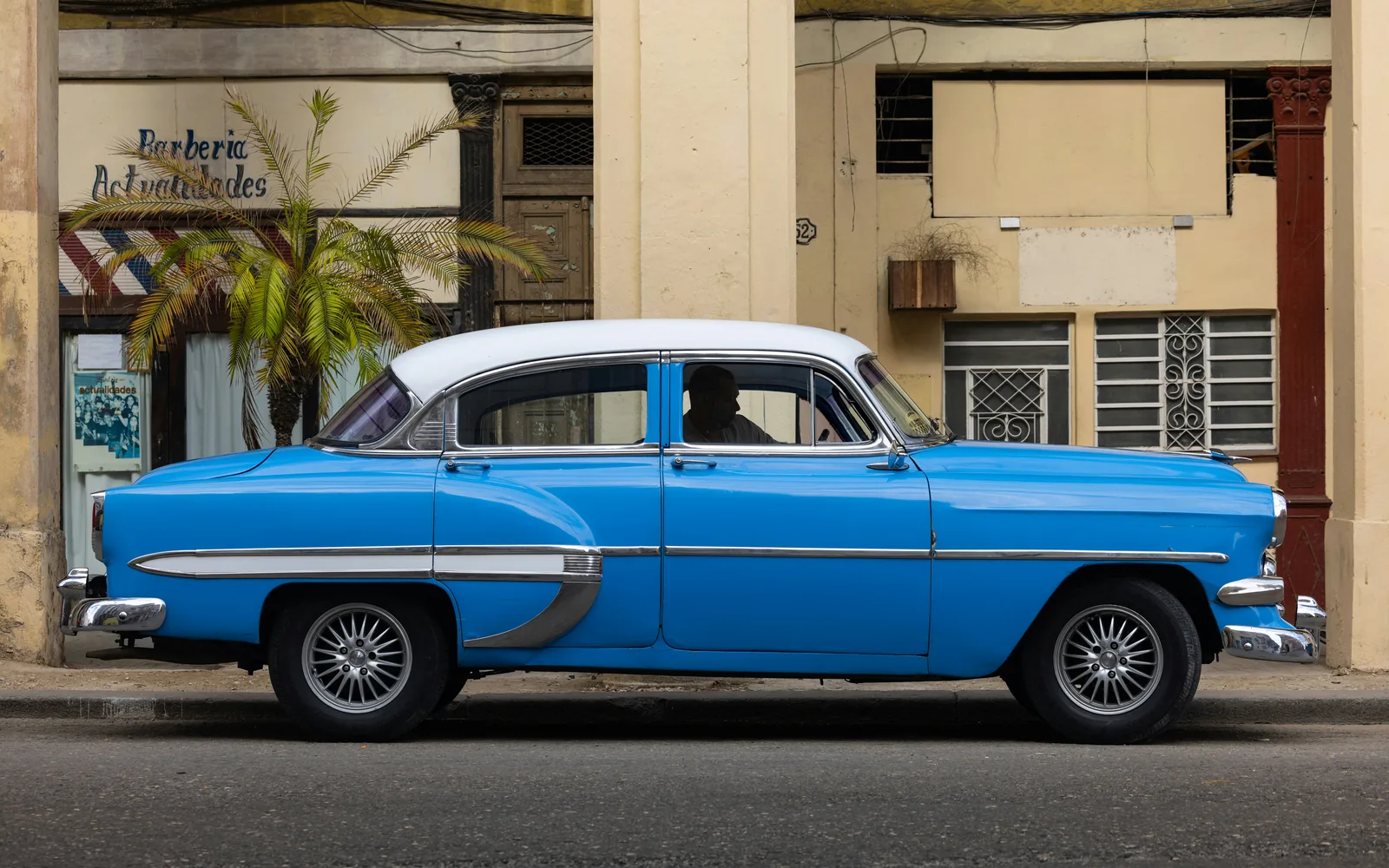
Cuba is the connectivity exception in the Caribbean
Most of the region runs on commercially competitive networks with reasonable wholesale rates. Cuba doesn't. Mobile data on the island has historically been expensive, slow, and unevenly available — paid Wi-Fi park hot-spots, scratch-card credit, and an island-wide network state that has changed several times in the last decade. We're not going to pretend otherwise.
Roamzy charges $16.59 per gigabyte in Cuba, or $0.0162 per megabyte, billed in real time. That's an order of magnitude above neighboring Dominican Republic and reflects the actual wholesale cost of data on the island. We don't disguise it. One per-MB rate across 193 countries means the same model — pay for what you used, no expiry, no subscription — just at a Cuba-shaped number.
How much will Roamzy actually cost on this trip?
Cuba is unusual in that you'll deliberately use less data than anywhere else: most messaging falls back to Wi-Fi at the casa or the hotel, you stop using maps once you've memorized a few routes, and video calls sit at the bottom of the priority list. Realistic usage is 0.2–0.5 GB/day for a tourist on the move:
| Trip length | Roamzy ($16.59/GB) | Tourist roaming pass | Local SIM / hot-spot card |
|---|---|---|---|
| 1-day cruise stop | $4.86 (300 MB) | $25–60 | $5–15 hot-spot card + queue |
| 5 days | $24.88 (1.5 GB) | $60–150 | $15–40 + paperwork |
| 2 weeks | $66.36 (4 GB) | $150–350 | $40–90 + 30-day cap |
Competitor prices in columns 3 and 4 are 2025 ranges based on typical offerings; exact figures depend on your home carrier and where you're standing on the island. Roamzy's rate in column 2 is our actual published rate from the pricing page.
A local SIM in Cuba is genuinely cheap on paper, but it requires a passport, a long queue at a state-run office, and a payment in CUP that often involves a side conversation about exchange. On a five-day trip, the time-cost rarely makes sense.
Where does Roamzy actually work on the ground?
- Havana (Vedado, Centro, Habana Vieja) — 4G most places, occasional drops to 3G
- Varadero — 4G across the resort strip and on the highway from José Martí
- Santiago de Cuba, Trinidad, Cienfuegos — 4G in the historic centers, 3G further out
- Viñales and rural Pinar del Río — 3G/4G in towns, often nothing on backroads
- Cayo Coco, Cayo Largo (cruise stops) — workable 4G near hotels and ports
Throughput on Cuban networks is lower than you're used to elsewhere in the Caribbean. Plan for "good enough for messaging" rather than streaming. Some apps and services may not behave the way they do at home — the situation has shifted before and may again. Check the current state of any app you depend on in the FAQ, and plan for fallbacks.
How do I install my Roamzy eSIM?
| Plug type | Voltage | Frequency | iOS | Android |
|---|---|---|---|---|
| Type A, B, C, L | 110 / 220 V | 60 Hz | iPhone XS+ | Pixel 3+, Galaxy S20+ |
- Sign in to Roamzy via Telegram or Google
- Top up the eSIM with a minimum of 20 USDT — stablecoins, no cards, no banks, no FX surcharges
- The QR code appears in the dashboard once payment confirms — install it before you fly
- Settings → Cellular → Add eSIM → scan QR
- The counter starts the moment you land at HAV, VRA, or HOG
Supported stablecoins, networks, and common iPhone/Android setup errors are in the FAQ.
What are Roamzy's honest limitations?
Cuba is the country where the rest of the Roamzy story matters most. The data is expensive, so a "tourist pack" that throttles you halfway through the week or auto-renews three months later costs more than just money — it costs the time of being on a Cuban network with a tariff already broken.
- No welcome promo that flips the second top-up. The first $16.59/GB is the hundredth.
- No fine-print throttling. The connection's already slow enough; we won't make it worse.
- No auto-renewal you forgot to cancel before flying out of HAV. Balance runs out, the eSIM stops.
The honest version of Cuba pricing is short: you are billed per megabyte and the balance never expires. We didn't write that to charm anyone; there was nothing else true to write.
What if my cruise continues to other ports?
- Dominican Republic — most common next port; very different network reality
- Bahamas — frequent itinerary pairing, eSIM hands over at sea
- If you want the underlying mechanics — how roaming actually gets priced and why it hurts